
The world of mobile app development is evolving at a rapid pace, thanks to the integration of artificial intelligence (AI). As a CS student, you’re likely already familiar with how Flutter has revolutionized app development, offering a fast and efficient way to create cross-platform apps. But when you combine Flutter with AI, the possibilities for app innovation are endless.
In this post, we will explore how AI is enhancing mobile app development and how Flutter developers can leverage these advancements to create smarter, more intuitive apps. Whether you’re just starting to learn Flutter or looking to enhance your development skills, this guide will help you understand the future of mobile apps.
1. The Role of AI in Mobile App Development
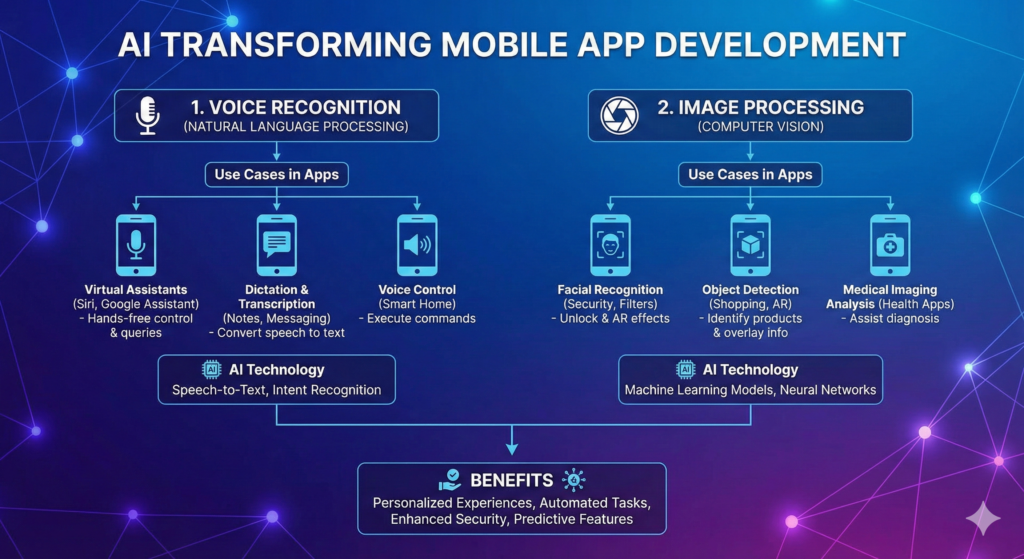
AI technologies like machine learning, natural language processing, and computer vision have already found their way into various mobile apps. AI powers features like chatbots, voice assistants, image recognition, and personalized recommendations. For mobile app developers, integrating AI can result in smarter, more dynamic apps that respond better to users’ needs.
In Flutter, developers can use AI models to implement features such as:
- Voice Recognition: Add voice commands to your app to create a more interactive user experience.
- Image Recognition: Allow your app to analyze and interpret images, making it perfect for industries like retail, healthcare, and security.
- Personalized Recommendations: By leveraging user data, AI can help recommend content, products, or services based on previous interactions, enhancing the overall user experience.
2. How Flutter and AI Work Together
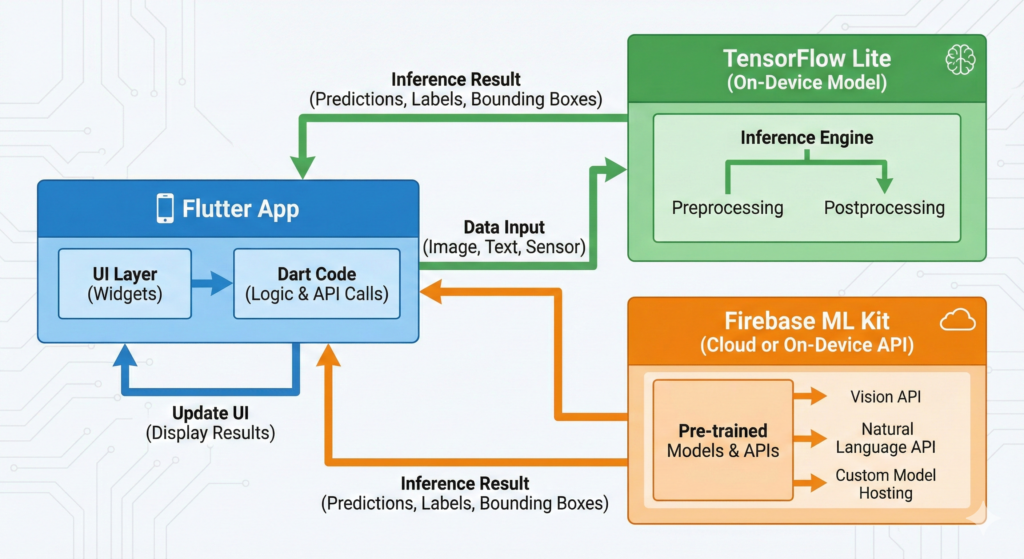
Flutter is a powerful framework for developing cross-platform apps, and when paired with AI, it can enable developers to create highly advanced apps with minimal effort. Here’s how:
- Smooth Integration of AI Models: Flutter allows easy integration with popular AI libraries such as TensorFlow, Firebase ML Kit, and Google ML Kit. These tools provide pre-trained models for machine learning tasks like image processing, text recognition, and translation.
- Real-Time Data Processing: With Flutter’s fast rendering engine and AI’s ability to process data in real-time, apps can become more dynamic and responsive. For example, AI can analyze user behavior while the app is in use and adjust the interface accordingly.
- Cross-Platform Compatibility: AI tools integrated with Flutter work seamlessly on both iOS and Android, allowing developers to deliver consistent, AI-powered features across platforms.


3. Why Developers Should Learn AI with Flutter
As you continue your learning journey in Flutter, adding AI to your skillset will give you a competitive edge in the job market. AI is no longer a futuristic concept—it’s actively shaping the development of mobile apps today. Here are a few reasons why integrating AI into your Flutter projects is a smart choice:
- Improved User Experience: AI helps apps adapt to users’ preferences, making them more engaging and user-friendly.
- Increased Efficiency: By automating certain tasks, AI allows developers to focus on more complex features, saving both time and resources.
- Future-Proof Your Career: As AI becomes more integrated into mobile app development, learning how to combine it with Flutter will keep you ahead of the curve in the ever-changing tech landscape.
Conclusion:
AI is revolutionizing mobile app development, and Flutter is making it easier than ever to integrate these powerful technologies into your apps. As a CS student with an interest in AI, mastering the combination of Flutter and AI will give you the tools to create innovative, user-centered mobile experiences. Start exploring AI-powered Flutter apps today and take your development skills to the next level!